Showing posts with label sewage. Show all posts

Friday, August 31, 2012

Yonkers raw sewage discharge 8/28/12 - sampling results and public notification

A SPDES outfall immediately south of the Yonkers Paddling & Rowing Club is discharging raw sewage 24/7. It was brought to Riverkeeper’s attention in July by members of the public.

Riverkeeper sampled for Enterococcus on Thursday 7/26/12 at 1015 and again on Tuesday 8/28/12 at 1305.

See reports and sample results below. Most recent at top.


View of the Yonkers Rowing Club and outfall. The outfall is under the bulkhead on the right side of the photo directly below the green SPDES sign.


On 8/28 there was sewage smell and the discharge was considerably harder from the outfall than at first visit on 7/26. Sampled directly from discharge at 1305.

Federal guideline for primary contact in fresh water: Enterococcus not to exceed 61 per 100ml.

Processed sample using 3 dilution levels to increase measurable range:
#1 (no dilution) result: >2420 Entero/100ml
#2 (1/10 dilution) result: >24,196 Entero/100ml
#3 (1/20 dilution) result: >48,392 Entero/100ml


IDEXX trays, #1 through #3, left to right.

On 7/26 we visited Rowing Club with Bob Walters, clear sewage smell in the air. Sampled discharge directly from pipe at low tide just south of the Rowing Club property under the public pier where it entered a shallow trench leading into the river. Discharge volume was relatively low.


Federal guideline for primary contact in fresh water: Enterococcus not to exceed 61 per 100ml.

Sampled at 1015. Processed on sample only.

#1 (no dilution) result: >2420 Entero/100ml


Tuesday, August 14, 2012

Westchester Sewage Release

On Thursday 8/9/2012, I sampled at the two discharge points, Yonkers and Tarrytown, both inshore and offshore. I also sampled at Irvington between the discharges and at Ossining because it had been flooding past both discharge points. Five of seven samples were “acceptable” – very low contamination.

All stations sampled (except exploratory site at Castle Oil at border of Tarrytown and Sleepy Hollow) are regular Riverkeeper monthly sampling locations.

If you look at our historical data at these sample sites you’ll see that contamination is often present and significant – when there is NOT a sewer main break. Chronic wet weather discharges are the real problem, not the accidents.

Yonkers mid channel: sampled at 1400, Entero MPN <10/100ml, flooding
Yonkers inshore at mouth of Saw Mill (one discharge was in Saw Mill): sampled at 1410, Entero MPN 10/100ml, flooding
Irvington at Boat Club beach: sampled at 1505, Entero MPN <10/100ml, flooding
Tappan Zee mid channel: sampled at 1555, Entero MPN <10/100ml, flooding
Tarrytown Marina (one discharge was in Andre Brook, off Marina): sampled at 1610, Entero MPN >24,200, high tide, smelly, discolored grey, brown water
Castle Oil terminal (one discharge near kayak launch here): sampled at 1725, Entero MPN 84/100ml, high tide, now odor or discoloration.
Ossining moorings and beach: sampled at 1810, Entero MPN <10/100ml, end of flood.

EPA guideline: Over 104 Entero/100ml is “unacceptable” for swimming and primary contact 

The estimated volume of the Westchester discharge was approx. 3 million gallon/day – it flowed about 29 hours / approx. 3.4 million gallons

For contrast, NYC discharges 28 BILLION gallons from CSOs annually – combined rain water and sewage.

About 20% of that is sewage – so 5.6 billion gallons is the sewage component.

Assuming 50 CSO events per year we get an average 112 million gallons of SEWAGE per CSO event – some more, some less.

So this Westchester release was minor compared with the chronic releases in NYC and elsewhere during rain events.

Regarding the Ironman Triathlon, I think the swimmers probably lucked out. Although it rain hard on Friday it did not rain all that long and then the rain held off overnight. My guess is that they had acceptable WQ Saturday morning. I was tempted to go early and sample but didn’t because IF the WQ had been bad we would have appeared to be real spoilers publicizing it after the fact. I want to address this issue without beating up on people.

And of course next year NYC will have to notify when CSOs deploy because RIVERKEEPER GOT THE “SEWAGE RIGHT TO KNOW ACT PASSED!

Saw Mill river entering Hudson at Yonkers. Sewage discharge was into Saw Mill a short distance inland 
Beach at Irvington Boat Club 
A guy crabbing right at the entrance to Tarrytown Marina. He didn’t want to hear about a sewage spill. 
Cloudy surface layer in Tarrytown Marina 

Andre Brook empties into Tarrytown Marina. There is a CSO or Bypass in Andre Brook 

SPDES sign at discharge point in Andre Brook 

Andre Brook 

Castle Oil / kayak launch. Chlorine tanker visible inland. Health Department was chlorinating this outfall. 


Tuesday, November 22, 2011

Happy Birthday Sparkill Watershed Alliance!

This week the Sparkill Watershed Alliance (SWA) celebrated it's 1st Anniversary with a gathering at Aleksandra Becnel's creek-side home, the perfect setting!


A handful of the Sparkill Watershed Alliance members celebrating!


(Right to Left) SWA Founder, Laurie Seeman, yours truly and Sparkill Creek

The Sparkill Creek is the only site in Riverkeeper's Water Quality Testing Study where water quality samples are collected from the land, not from the patrol boat. The surprisingly poor water quality we found in the Sparkill (it's the most frequently contaminated site in our study) inspired Rockland County clean water advocate Laurie Seeman to form a citizen alliance to learn more about the Sparkill and address its pollution problems.

Since its first meetings in the fall of 2010, the Sparkill Watershed Alliance has launched a number of initiatives to promote, protect and study this precious natural resource. They collaborate with legislators, educators, wastewater treatment plant representatives, and state and local agencies to achieve their clean water goals.

In collaboration with Riverkeeper's Water Quality Program, SWA is conducting an expanded, citizen-led water quality study on the creek. Our shared goal is to identify the source(s) of the sewage contamination in the creek and clean them up.


SWA collecting water samples from the New Jersey arm of the creek


SWA members collecting samples from a site in Tappan, NY


John explaining how the samples will be incubated and scored for sewage contamination levels

The Sparkill Watershed Alliance is documenting and studying the creek with other tools as well, working towards a Sparkill Watershed Report Card. With Butch Rosenfeld, a staff scientist with the NYC DEP, they have been collecting and studying macro-invertebrates, another indicator of water quality conditions.

Collecting samples from the creek in Tackamac Town Park this summer


Butch Rosenfeld explaining what macro-invertebrates tell us about water quality

These bugs spell good news for the upriver section of the creek

The work that the Sparkill Watershed Alliance has undertaken on behalf of the creek that threads through their communities is an inspiration to many, and a gift to the thousands of residents of the Sparkill watershed.

The Hudson River and its tributary streams, rivers and creeks need 100 more citizen groups like SWA to take ownership of their well-being. Riverkeeper is here to provide guidance and support but we need true public engagement and stewardship if we are going to achieve and maintain clean, healthy waterways in our communities.

Happy 1st Birthday Sparkill Watershed Alliance, may you enjoy many, many more!


Laurie's inspiration - clean waterways for children
Laurie and John with campers from Strawtown Studio's Summer Waterways Program

Photos courtesy of Laurie Peek and Tracy Brown

Monday, October 03, 2011

UPDATE: Beacon Water Quality Notification 9/30

We sampled the water quality at 9 PM sharp on 9/30, just before low tide when the sewage discharge was separate and distinct from river water. We were unable to resample earlier in the day because the tide was unusually high and up to the discharge pipe.

The Enterococcus levels were again higher than our measurement limit using a 1 in 10 dilution, >24,196 Entero per 100 ml. That is greater than 397 times the EPA guideline for acceptable water quality for primary contact - 61 Enterococcus per 100/ml. The water from this discharge pipe is very contaminated with sewage.

As of 9/30, this discharge has been active since Friday the 17th (at least) when it was first reported to Riverkeeper - that's 14 days. There was no signage or police tape at the site to warn the public against contacting the contaminated water.

testing tray
Sample tray from 9 PM, 9/30 sample, 1/10 dilution. All wells fluorescing indicating result >24,196 Entero per 100 ml - more than 397 times the EPA guideline for acceptable water quality (61 Entero per 100/ml).


Tuesday, September 27, 2011

Beacon Sewage Overflow

Raw sewage is flowing into the Beacon Harbor from a pipe at the northeastern corner of the harbor.

A member of the public called this sewage release into Riverkeeper's office on Saturday, September 17. Riverkeeper investigated the report, documented the discharge and called it into the NY State Department of Environmental Conservation (DEC) and authorities in the City of Beacon on Sunday, September 18.

Riverkeeper sampled in the area of the discharge on September 23. That sampling confirmed very high sewage levels (>24,196 per 100/ml, the highest our system can read). Based on this data, and the lack of public notification for this ongoing release, today we issued a press release strongly advising the public to avoid contact with the water in Beacon Harbor until the source of the spill has been fixed and testing confirms that water quality has returned to acceptable levels.


Video showing the flow rate of the spill
The blue color of the water is typical for sewage spills

The water is flowing out of this spillway and into the harbor

This is the view of the harbor with the source of the sewage overflow behind you

Debris that appears to be toilet paper clings to the branches of shrubs next to the overflowing pipe
Learn about our push for a Sewage Right to Know Law for New York State
See our historic water quality data for Beacon Harbor

Monday, July 25, 2011

Massive Sewage Spill in NYC

A catastrophic fire at the North River Wastewater Treatment Plant on the upper westside of Manhattan last Wednesday, July 20th, led to a temporary plant shutdown and the dumping of millions of gallons of raw sewage into the Hudson and Harlem Rivers. The untreated sewage flowed into the water from numerous pipes along the shoreline of Manhattan.

Despite the huge volume of wastewater - an estimated 120 million gallons a day for three days - many city residents were unaware of the spill, or learned of it too late to avoid contact with the contaminated water.


Swimmers in the park just north of the plant on 7/21

We approached them in the patrol boat and warned them


The morning after the fire Riverkeeper conducted the first of three water quality sampling runs in the waters around Manhattan Island, including New York Harbor and sites as far north as the Tappan Zee Bridge.


On Thursday the 21st, the first full day of the sewage discharge, we found extremely high levels of sewage contamination along the west shore of Manhattan, which at the time of sampling, did not extend north to Yonkers or south of the Battery. Sewage contamination was lower in the middle of the river, and still lower on the New Jersey side. In fact, on the New Jersey side, Enterococcus levels were “acceptable” per EPA guidelines.


On Friday the 22nd our sampling indicated similar results, with the highest contamination area being the west side of Manhattan. All sampling occurred before the North River Plant resumed partial operation on the evening of Friday, 7/22. It’s important to note that as of Friday evening, although the contamination pattern was similar and while contamination levels were lower than on the first day of sampling, some areas along the Manhattan shoreline were still very contaminated.


We sampled again today, Monday the 25th. An update with additional data will be posted soon.


In the meantime for more information on the spill:


Wednesday, June 01, 2011

Water Quality Sampling Season Begins

The Water Quality Sampling Season for 2011 has officially begun and with it life gets even busier!

Today we sent out our first monthly Water Quality Report of the year - for our May patrol - and a flurry of emails from throughout the Hudson Valley quickly filled our inboxes. We hear from all types of folks when these reports go out - some with questions, some sharing observations and others providing encouragement. It takes us a week or more to sort through them and reply but it's worth the effort. The public is our partner on this project - we cannot improve water quality in the Hudson without an engaged public. With the public we most certainly can, one community and waterfront at a time.

Carol Knudson (Columbia U) and John approaching mouth of Furnace Brook on east side of Haverstraw Bay to collect a sample


If you don't already receive our monthly water quality reports you should sign up, it's a good tale from the river painstakingly written by John and combined with data and artwork by yours truly. To sign up send an email to info@riverkeeper.org and ask to be put on the Water Quality list. Or sign up for all Riverkeeper emails
.

Here is the narrative from May, click the link below to see the full report with data. If you find it interesting share it with friends and neighbors.


First sampling patrol of 2011 - May 16 through May 19
Highlights

Our May patrol was rainy, wet and nasty. It rained between 1.2 and 2.5 inches during and before our patrol (with local heavy rain every day as we worked north) and, as a result, we found more unacceptable water quality than ever before. Not one sample site north of Poughkeepsie was “acceptable.” This is stunning. I've never been on a patrol like this one. Read on to see how the Hudson River can be regularly and dramatically compromised by sewage releases triggered by something as simple as a few inches of rain.

Of 74 sampling locations:
59 (80%) were “unacceptable”
7 (9%) were “possible risk”
8 (11%) were “acceptable”

Rain events often lead to sewage overflows and more untreated sewage in the Hudson (which we detect as higher Entero counts). While we find unacceptable levels of sewage indicators at some locations and times even in dry weather, the water quality at most of our sampling locations degrades during and after rain. Sometimes the entire river is affected. Why? Because rainfall causes many sewer systems to overload and discharge raw sewage into the Hudson and its tributaries. The solution? We know it and, in some places, are already doing it: we need to build new sewage treatment infrastructure and repair/upgrade existing plants and systems. First, we have to reduce and then fully treat our wastewater.

Take your time looking at the data figure below; we won’t see too many patrols like this one… I hope.

Some Observations

NY Harbor (day 1): All sites were either “unacceptable” or “possible risk”. Note that one of the lowest cell counts we found was right in the upwelling effluent at the massive North River sewer plant near 125th street. Take away: once the sewage reaches the plant it is pretty effectively treated. In NYC the problem isn’t with the plants; it’s with all the pipes delivering the combined sewage and rain TO the 14 NYC sewer plants. The plumbing can’t handle the flow so the city has built (and NYS permits) about 480 Combined Sewer Overflows (CSOs) to release the overburden of sewage and rain during wet weather events into the River and Harbor – around 30 billion gallons a year. Yes, billion, no typo.

Yonkers to Peekskill (day 2): The Westchester sewer plant at Yonkers tested “acceptable,” another example of a plant doing its job pretty well. Money invested in wastewater treatment makes water quality better, it’s simple. However, all the other near shore sites in this section of river were “unacceptable.” Several of our sampling sites recorded their highest Entero counts so far since 2006 when we started measuring Entero in this section of the River.

But look at the data and you’ll see that all our “mid-River” sample sites in this area had much lower Entero counts compared to the near shore sites. The data clearly shows that the contamination originates at the shore, where humans are, and the middle of the deep water river is buffered by the massive volume of water in the Hudson. Still, it’s impressive to note that even the middle of the River (where it’s two to three miles wide) was impacted to some degree by sewage contamination when we sampled on May 17th. It takes a whole lot of poop to do that.

Bear Mountain to Port Ewen (day 3): Bravo to Cold Spring and Little Stony Point, both sample sites were “acceptable”. That’s no small feat for this month’s survey! Note also that Poughkeepsie ramp and the deep-water site at the Poughkeepsie drinking water intake had low counts compared to our samples for the rest of the estuary this month. So nice going Poughkeepsie as well.

The drinking water intake at Port Ewen, a couple miles south of Rondout Creek, didn’t fare so well. The Entero count was 199. The highest we’ve measured there was 1733 in July 2009 (a really rainy summer). So the drinking water intake is withdrawing water that the EPA says you shouldn’t swim in. Let’s hope the disinfection systems are up to the job.

Rondout Creek/Kingston to Waterford (day 4): My guess is that the sewage contamination arriving at Port Ewen is from the Rondout. The tide was ebbing when we sampled this time. Look at the data for the Rondout sites below (Eddyville, Kingston public dock, Kingston sewage treatment plant outfall). But please don’t rush to put all the blame on Kingston. Note that the Entero count at Eddyville (upstream from Kingston) was higher than our system can measure in fresh water, >2420 cells/100ml. That’s higher (we just don’t know how much) than the sample I took right next to one of the Kingston Combined Sewer Overflows at the Kingston Public Dock. So, that day, the water entering the tidal portion of the Rondout from the upper Rondout watershed had more Entero. Kingston is clearly not the only problem affecting water quality on the tidal portion of Rondout Creek.

You may notice that at the very northern end of the survey area Entero counts started to come down. That’s because the last heavy rain in that area took place the night before. So the “relatively” less contaminated water coming in from the Upper Hudson and the Mohawk was pushing the plug of contamination (released earlier by the CSOs and sewer plants in the Capitol District) south. Check the cell counts for Bethlehem, Castleton, Coeymans and Coxsackie. My bet is that some, maybe most, of the Entero we measured at those communities on 5/19 came down from the Capitol District. We’ve seen this pattern before when we sample within 48 hours after a heavy rain event in the Albany area.

Until next month,
John Lipscomb
Riverkeeper patrol boat "R. Ian Fletcher"

View full report with data.

This month our sampling patrol was carried out aboard “Launch 5”
while our boat was in final stages of a major rebuild.
Many thanks to Greg Porteus, owner of “Launch 5”

Heavy rain in May resulted in this massive flow of water over the dam at Troy from the upper Hudson


Wednesday, October 20, 2010

Sewage Overflows into the Saw Mill River at Yonkers

Clearwater Educator Maija Neimisto and Yonkers resident Andy Hudak
sample the discharge.

While on our October water quality sampling patrol, friends from Clearwater alerted us to a sewage discharge in Yonkers. With their help, and the help of a local kayaker, Andy Hudak, samples were taken and delivered to the patrol boat for incubation. The results?

The samples reach the maximum that our system can read - 24,196 Enterococcus per 100/ml - that's 400 times greater than the maximum safe level of Enterococcus as defined in the EPA clean water standards.

Local and State agencies knew about the discharge - an estimated 4.4 million gallons coming from a broken sewage main in Tarrytown. Was the public notified? No. Were people kayaking and fishing nearby? Yes.

New York State needs a Sewage Right to Know law to ensure that our public health officials take the actions necessary to protect the public from contact with known sewage overflows when they occur.


Thursday, August 20, 2009

Sewage Discharge at Troy


On August 25th we found a dry weather sewage discharge at Troy. I contacted NYSDEC via cell. An Environmental Conservation Officer met me at Troy and we returned to document the site together. DEC and Riverkeeper contacted City of Troy independently and the outfall was shut off. This event will be part of the evidence used by DEC in a potential enforcement action against Troy. The sample bottle contains sewage and toilet paper fragments – microbial levels were too high to measure – “off the chart.”

Wednesday, June 17, 2009

Combined Sewer Overflow (CSO)


CSOs are one of the primary reasons we still have dangerous spikes of sewage contamination in the Hudson. This one is from Manhattan (there are 500 of them in NYC alone), but we see the same thing in Troy and CSOs exist at many communities in between. Generally CSOs only discharge untreated sewage when there has been a rain event that overloads the system – but not always. These sewage discharges are “permitted” by NYS but it’s unacceptable that we still have these problems 37 years after passage of the Clean Water Act. It doesn’t have to continue this way. The public has to demand better – then polluters will lose permits and funding to repair the system will be found.

Tuesday, October 21, 2008

Testing Water Quality


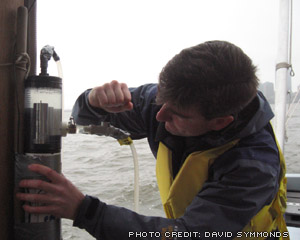
Scientist Andy Juhl and assistant Carol Knudson from Lamont-Doherty Earth Observatory processing samples. We “cook” the microbial samples for 24 hours at 41 degrees centigrade in our onboard incubator. This equipment allows us to sample day after day on patrol without having to return to the Lamont lab every evening.

Wednesday, September 17, 2008

Testing Water Quality at Kingston


Collecting a sample directly from the outfall of the Kingston sewage treatment plant,
which discharges into Rondout Creek in downtown Kingston.


Rondout Creek is heavily used by fishermen, recreational boaters, kayakers and swimmers. We sample at three locations during every patrol. Some days the cleanest water we find is at the sewage treatment plant discharge. That means that raw untreated sewage is entering the creek at other locations. The local health department does not test in Rondout Creek and posts no warnings for the public. Meanwhile, the DEC renews permits to the City of Kingston for raw sewage overflows and Kingston plans to build a few thousand new housing units that will tap into the existing sewage treatment system.

Saturday, May 17, 2008

Water Quality Sampling Tray

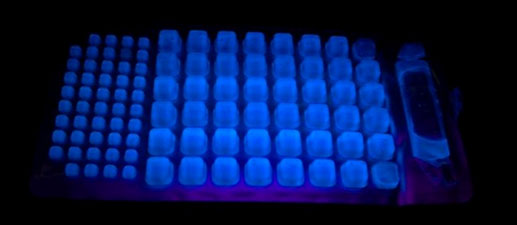
This is a microbial sample tray viewed under UV light after incubating 24 hours on the patrol boat.


All the fluorescent wells are alive with Enterococcus bacteria, an indicator of untreated human waste. A strong result such as this one indicates a cell count GREATER than 24,000 entero cells per 100 milliliter sample. Federal guidelines recommend closure of beaches at 104 cells per 100ml and above. So this is really bad water.


Sunday, December 16, 2007

CSO flows into the Harlem River


Another PERMITTED pollution discharge. This Combined Sewage Overflow (CSO) is on the Manhattan side of the Harlem River. The discharge water is steaming and gulls are eating the floating solids coming out of the sewer pipe.

Saturday, October 27, 2007

CSO flowing in Troy


Troy, just above City Marina. A massive discharge from a CSO (Combined Sewer Overflow) discharge during heavy rain event. See the DEC permit sign on the fence above the discharge.

We often see locals fishing at this location. Riverkeeper is working with local municipalities, the NYSDEC and local sewer plants to reduce sewage overflows and install proper disinfection systems at plants in Albany, Troy and Rensselaer.


This sign in Troy represents a NY State PERMIT TO POLLUTE. These signs are all up and down the Hudson.

Thursday, August 16, 2007

Clams in Haverstraw Bay

Photo by John Lipscomb
There are millions of these beautiful little clams in the sediment in Haverstraw Bay. They are a brackish water mollusc called "Rangia cuneata" native to the Gulf of Mexico. They either invaded or re-colonized the lower Hudson in the 1980's. Rangia are harvested in some parts of the eastern U.S. and Gulf of Mexico but eating them here might be risky. 


Riverkeeper/Lamont-Doherty sampling periodically finds violation levels of sewage related microbes in Haverstraw Bay and the local tributaries.


Wednesday, December 13, 2006

Water Quality Monitoring Study 2006

Water quality and sewage indicator sampling with Lamont-Doherty Earth Observatory, Columbia University team - lower estuary from Nyack to NY Harbor. Sample at Sparkill Creek and Piermont, the mouth of the Saw Mill River, at the Yonkers sewer plant discharge, in the Harlem and East Rivers, in Newtown Creek at two locations and at the Battery. This pilot sampling program began during the summer. The preliminary data collected will be used to seek funding for a long term, full estuary study which Riverkeeper and Lamont-Doherty hope to begin early in 2007.


Photos by John Lipscomb

Thursday, November 02, 2006

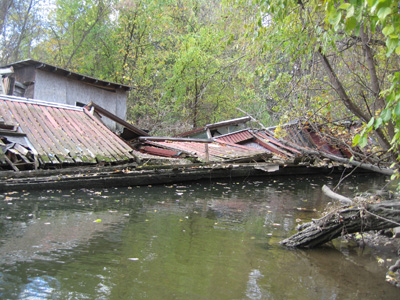
Collapsing House Barge Investigated


Esopus Creek houseboat barge


Patrol from Kingston to Hudson with Alex Matthiessen aboard. At Saugerties we launched the skiff and photographed an abandoned “house-barge” about which we have received a number of complaints. We also investigated the sewer plant outfall/discharge inside Catskill Creek which is also the subject of numerous complaints.