Showing posts with label CSO. Show all posts

Friday, August 31, 2012

Yonkers raw sewage discharge 8/28/12 - sampling results and public notification

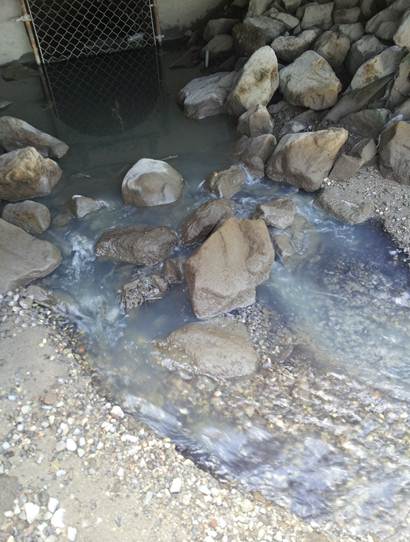
A SPDES outfall immediately south of the Yonkers Paddling & Rowing Club is discharging raw sewage 24/7. It was brought to Riverkeeper’s attention in July by members of the public.

Riverkeeper sampled for Enterococcus on Thursday 7/26/12 at 1015 and again on Tuesday 8/28/12 at 1305.

See reports and sample results below. Most recent at top.


View of the Yonkers Rowing Club and outfall. The outfall is under the bulkhead on the right side of the photo directly below the green SPDES sign.


On 8/28 there was sewage smell and the discharge was considerably harder from the outfall than at first visit on 7/26. Sampled directly from discharge at 1305.

Federal guideline for primary contact in fresh water: Enterococcus not to exceed 61 per 100ml.

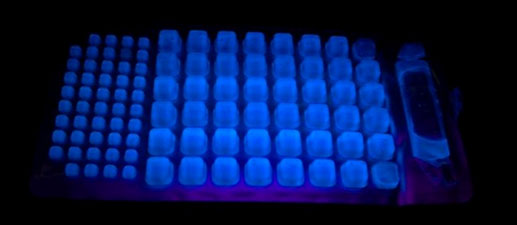
Processed sample using 3 dilution levels to increase measurable range:
#1 (no dilution) result: >2420 Entero/100ml
#2 (1/10 dilution) result: >24,196 Entero/100ml
#3 (1/20 dilution) result: >48,392 Entero/100ml


IDEXX trays, #1 through #3, left to right.

On 7/26 we visited Rowing Club with Bob Walters, clear sewage smell in the air. Sampled discharge directly from pipe at low tide just south of the Rowing Club property under the public pier where it entered a shallow trench leading into the river. Discharge volume was relatively low.


Federal guideline for primary contact in fresh water: Enterococcus not to exceed 61 per 100ml.

Sampled at 1015. Processed on sample only.

#1 (no dilution) result: >2420 Entero/100ml


Monday, October 03, 2011

UPDATE: Beacon Water Quality Notification 9/30

We sampled the water quality at 9 PM sharp on 9/30, just before low tide when the sewage discharge was separate and distinct from river water. We were unable to resample earlier in the day because the tide was unusually high and up to the discharge pipe.

The Enterococcus levels were again higher than our measurement limit using a 1 in 10 dilution, >24,196 Entero per 100 ml. That is greater than 397 times the EPA guideline for acceptable water quality for primary contact - 61 Enterococcus per 100/ml. The water from this discharge pipe is very contaminated with sewage.

As of 9/30, this discharge has been active since Friday the 17th (at least) when it was first reported to Riverkeeper - that's 14 days. There was no signage or police tape at the site to warn the public against contacting the contaminated water.

testing tray
Sample tray from 9 PM, 9/30 sample, 1/10 dilution. All wells fluorescing indicating result >24,196 Entero per 100 ml - more than 397 times the EPA guideline for acceptable water quality (61 Entero per 100/ml).


Tuesday, August 09, 2011

"How Is the Water?" Report Released

Today we released our report on sewage contamination in the Hudson River Estuary, "How Is the Water?"

It was a big group effort - 5 years to collect the data and 5 months to write and release the report. I'm sure this will not be our last report on the sewage contamination we are battling. It's just another point in an ongoing conversation.


We were honored to be joined by New York State Senator Adriano Espaillat and New York State Assemblyman Thomas Abinanti. We will be working with both representatives on a Sewage Right to Know law for New Yorkers.


Download the report and learn about patterns and sources of sewage in the Hudson, and view some of the preliminary news coverage:

Wednesday, June 17, 2009

Combined Sewer Overflow (CSO)


CSOs are one of the primary reasons we still have dangerous spikes of sewage contamination in the Hudson. This one is from Manhattan (there are 500 of them in NYC alone), but we see the same thing in Troy and CSOs exist at many communities in between. Generally CSOs only discharge untreated sewage when there has been a rain event that overloads the system – but not always. These sewage discharges are “permitted” by NYS but it’s unacceptable that we still have these problems 37 years after passage of the Clean Water Act. It doesn’t have to continue this way. The public has to demand better – then polluters will lose permits and funding to repair the system will be found.

Sunday, December 16, 2007

CSO flows into the Harlem River


Another PERMITTED pollution discharge. This Combined Sewage Overflow (CSO) is on the Manhattan side of the Harlem River. The discharge water is steaming and gulls are eating the floating solids coming out of the sewer pipe.

Saturday, October 27, 2007

CSO flowing in Troy


Troy, just above City Marina. A massive discharge from a CSO (Combined Sewer Overflow) discharge during heavy rain event. See the DEC permit sign on the fence above the discharge.

We often see locals fishing at this location. Riverkeeper is working with local municipalities, the NYSDEC and local sewer plants to reduce sewage overflows and install proper disinfection systems at plants in Albany, Troy and Rensselaer.


This sign in Troy represents a NY State PERMIT TO POLLUTE. These signs are all up and down the Hudson.

Wednesday, November 01, 2006

Beauty and the Beast

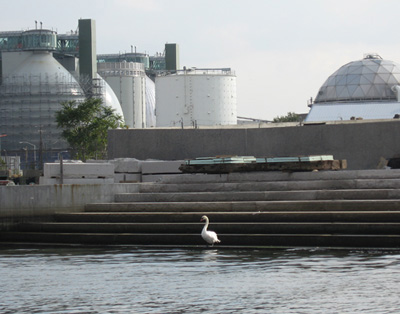
Swan at Newtown Creek sewage treatment plant.


Finding more sewage and trash from Combined Sewer Overflows on the creek – NYC alone has 700 of them.