Showing posts with label tributaries. Show all posts

Monday, March 12, 2012

Water Quality Talk in Brooklyn

Last week Riverkeeper was at the Brooklyn Brewery discussing local water quality issues with a full room of area clean water advocates.

Riverkeeper staff and volunteers were joined by
City Councilman Steve Levin and other community leaders.

The "How Is the Water?" talk was sponsored by the Newtown Creek Alliance and the brewery. The Brooklyn activist network turned out in force, including folks from the New York City Water Trail Association and the North Brooklyn Boat Club, with great questions and comments on the state of the creek and a clear passion for its future renewal.

After Riverkeeper's presentation, City Councilman Stephen Levin announced that he has introduced Sewage Right to Know legislation for New York City. Welcome news, especially for the paddlers, swimmers and fishermen in the room!

If you missed this event you have another chance to catch Riverkeeper's "How's the Water?" presentation this Thursday at the REI Soho store in Manhattan at 7pm. We hope to see you there!


Tuesday, November 22, 2011

Happy Birthday Sparkill Watershed Alliance!

This week the Sparkill Watershed Alliance (SWA) celebrated it's 1st Anniversary with a gathering at Aleksandra Becnel's creek-side home, the perfect setting!


A handful of the Sparkill Watershed Alliance members celebrating!


(Right to Left) SWA Founder, Laurie Seeman, yours truly and Sparkill Creek

The Sparkill Creek is the only site in Riverkeeper's Water Quality Testing Study where water quality samples are collected from the land, not from the patrol boat. The surprisingly poor water quality we found in the Sparkill (it's the most frequently contaminated site in our study) inspired Rockland County clean water advocate Laurie Seeman to form a citizen alliance to learn more about the Sparkill and address its pollution problems.

Since its first meetings in the fall of 2010, the Sparkill Watershed Alliance has launched a number of initiatives to promote, protect and study this precious natural resource. They collaborate with legislators, educators, wastewater treatment plant representatives, and state and local agencies to achieve their clean water goals.

In collaboration with Riverkeeper's Water Quality Program, SWA is conducting an expanded, citizen-led water quality study on the creek. Our shared goal is to identify the source(s) of the sewage contamination in the creek and clean them up.


SWA collecting water samples from the New Jersey arm of the creek


SWA members collecting samples from a site in Tappan, NY


John explaining how the samples will be incubated and scored for sewage contamination levels

The Sparkill Watershed Alliance is documenting and studying the creek with other tools as well, working towards a Sparkill Watershed Report Card. With Butch Rosenfeld, a staff scientist with the NYC DEP, they have been collecting and studying macro-invertebrates, another indicator of water quality conditions.

Collecting samples from the creek in Tackamac Town Park this summer


Butch Rosenfeld explaining what macro-invertebrates tell us about water quality

These bugs spell good news for the upriver section of the creek

The work that the Sparkill Watershed Alliance has undertaken on behalf of the creek that threads through their communities is an inspiration to many, and a gift to the thousands of residents of the Sparkill watershed.

The Hudson River and its tributary streams, rivers and creeks need 100 more citizen groups like SWA to take ownership of their well-being. Riverkeeper is here to provide guidance and support but we need true public engagement and stewardship if we are going to achieve and maintain clean, healthy waterways in our communities.

Happy 1st Birthday Sparkill Watershed Alliance, may you enjoy many, many more!


Laurie's inspiration - clean waterways for children
Laurie and John with campers from Strawtown Studio's Summer Waterways Program

Photos courtesy of Laurie Peek and Tracy Brown

Wednesday, June 01, 2011

Water Quality Sampling Season Begins

The Water Quality Sampling Season for 2011 has officially begun and with it life gets even busier!

Today we sent out our first monthly Water Quality Report of the year - for our May patrol - and a flurry of emails from throughout the Hudson Valley quickly filled our inboxes. We hear from all types of folks when these reports go out - some with questions, some sharing observations and others providing encouragement. It takes us a week or more to sort through them and reply but it's worth the effort. The public is our partner on this project - we cannot improve water quality in the Hudson without an engaged public. With the public we most certainly can, one community and waterfront at a time.

Carol Knudson (Columbia U) and John approaching mouth of Furnace Brook on east side of Haverstraw Bay to collect a sample


If you don't already receive our monthly water quality reports you should sign up, it's a good tale from the river painstakingly written by John and combined with data and artwork by yours truly. To sign up send an email to info@riverkeeper.org and ask to be put on the Water Quality list. Or sign up for all Riverkeeper emails
.

Here is the narrative from May, click the link below to see the full report with data. If you find it interesting share it with friends and neighbors.


First sampling patrol of 2011 - May 16 through May 19
Highlights

Our May patrol was rainy, wet and nasty. It rained between 1.2 and 2.5 inches during and before our patrol (with local heavy rain every day as we worked north) and, as a result, we found more unacceptable water quality than ever before. Not one sample site north of Poughkeepsie was “acceptable.” This is stunning. I've never been on a patrol like this one. Read on to see how the Hudson River can be regularly and dramatically compromised by sewage releases triggered by something as simple as a few inches of rain.

Of 74 sampling locations:
59 (80%) were “unacceptable”
7 (9%) were “possible risk”
8 (11%) were “acceptable”

Rain events often lead to sewage overflows and more untreated sewage in the Hudson (which we detect as higher Entero counts). While we find unacceptable levels of sewage indicators at some locations and times even in dry weather, the water quality at most of our sampling locations degrades during and after rain. Sometimes the entire river is affected. Why? Because rainfall causes many sewer systems to overload and discharge raw sewage into the Hudson and its tributaries. The solution? We know it and, in some places, are already doing it: we need to build new sewage treatment infrastructure and repair/upgrade existing plants and systems. First, we have to reduce and then fully treat our wastewater.

Take your time looking at the data figure below; we won’t see too many patrols like this one… I hope.

Some Observations

NY Harbor (day 1): All sites were either “unacceptable” or “possible risk”. Note that one of the lowest cell counts we found was right in the upwelling effluent at the massive North River sewer plant near 125th street. Take away: once the sewage reaches the plant it is pretty effectively treated. In NYC the problem isn’t with the plants; it’s with all the pipes delivering the combined sewage and rain TO the 14 NYC sewer plants. The plumbing can’t handle the flow so the city has built (and NYS permits) about 480 Combined Sewer Overflows (CSOs) to release the overburden of sewage and rain during wet weather events into the River and Harbor – around 30 billion gallons a year. Yes, billion, no typo.

Yonkers to Peekskill (day 2): The Westchester sewer plant at Yonkers tested “acceptable,” another example of a plant doing its job pretty well. Money invested in wastewater treatment makes water quality better, it’s simple. However, all the other near shore sites in this section of river were “unacceptable.” Several of our sampling sites recorded their highest Entero counts so far since 2006 when we started measuring Entero in this section of the River.

But look at the data and you’ll see that all our “mid-River” sample sites in this area had much lower Entero counts compared to the near shore sites. The data clearly shows that the contamination originates at the shore, where humans are, and the middle of the deep water river is buffered by the massive volume of water in the Hudson. Still, it’s impressive to note that even the middle of the River (where it’s two to three miles wide) was impacted to some degree by sewage contamination when we sampled on May 17th. It takes a whole lot of poop to do that.

Bear Mountain to Port Ewen (day 3): Bravo to Cold Spring and Little Stony Point, both sample sites were “acceptable”. That’s no small feat for this month’s survey! Note also that Poughkeepsie ramp and the deep-water site at the Poughkeepsie drinking water intake had low counts compared to our samples for the rest of the estuary this month. So nice going Poughkeepsie as well.

The drinking water intake at Port Ewen, a couple miles south of Rondout Creek, didn’t fare so well. The Entero count was 199. The highest we’ve measured there was 1733 in July 2009 (a really rainy summer). So the drinking water intake is withdrawing water that the EPA says you shouldn’t swim in. Let’s hope the disinfection systems are up to the job.

Rondout Creek/Kingston to Waterford (day 4): My guess is that the sewage contamination arriving at Port Ewen is from the Rondout. The tide was ebbing when we sampled this time. Look at the data for the Rondout sites below (Eddyville, Kingston public dock, Kingston sewage treatment plant outfall). But please don’t rush to put all the blame on Kingston. Note that the Entero count at Eddyville (upstream from Kingston) was higher than our system can measure in fresh water, >2420 cells/100ml. That’s higher (we just don’t know how much) than the sample I took right next to one of the Kingston Combined Sewer Overflows at the Kingston Public Dock. So, that day, the water entering the tidal portion of the Rondout from the upper Rondout watershed had more Entero. Kingston is clearly not the only problem affecting water quality on the tidal portion of Rondout Creek.

You may notice that at the very northern end of the survey area Entero counts started to come down. That’s because the last heavy rain in that area took place the night before. So the “relatively” less contaminated water coming in from the Upper Hudson and the Mohawk was pushing the plug of contamination (released earlier by the CSOs and sewer plants in the Capitol District) south. Check the cell counts for Bethlehem, Castleton, Coeymans and Coxsackie. My bet is that some, maybe most, of the Entero we measured at those communities on 5/19 came down from the Capitol District. We’ve seen this pattern before when we sample within 48 hours after a heavy rain event in the Albany area.

Until next month,
John Lipscomb
Riverkeeper patrol boat "R. Ian Fletcher"

View full report with data.

This month our sampling patrol was carried out aboard “Launch 5”
while our boat was in final stages of a major rebuild.
Many thanks to Greg Porteus, owner of “Launch 5”

Heavy rain in May resulted in this massive flow of water over the dam at Troy from the upper Hudson


Wednesday, October 20, 2010

Sewage Overflows into the Saw Mill River at Yonkers

Clearwater Educator Maija Neimisto and Yonkers resident Andy Hudak
sample the discharge.

While on our October water quality sampling patrol, friends from Clearwater alerted us to a sewage discharge in Yonkers. With their help, and the help of a local kayaker, Andy Hudak, samples were taken and delivered to the patrol boat for incubation. The results?

The samples reach the maximum that our system can read - 24,196 Enterococcus per 100/ml - that's 400 times greater than the maximum safe level of Enterococcus as defined in the EPA clean water standards.

Local and State agencies knew about the discharge - an estimated 4.4 million gallons coming from a broken sewage main in Tarrytown. Was the public notified? No. Were people kayaking and fishing nearby? Yes.

New York State needs a Sewage Right to Know law to ensure that our public health officials take the actions necessary to protect the public from contact with known sewage overflows when they occur.


Friday, May 21, 2010

Damaged Barges Dumping Foam into Newtown Creek


A barge remains berthed at north side of Newtown Creek just east of the Pulaski Bridge. There is reason to believe that this heavily damaged barge has been abandoned and has already lost some floatation foam to New York Harbor waters.

We have seen foam blocks on Newtown Creek on several occasions.

Other barges – also presumably owned by “Pile Foundation” - have been at a job site at the lower east side of Manhattan both north and south of the Williamsburg Bridge for several years. These barges also show heavy damage from collisions/age/rough handling and exposed floatation foam.


We have also seen foam blocks in the East River near the construction site on several occasions.


Saturday, October 03, 2009

Polluted Waters: Newtown Creek, Brooklyn

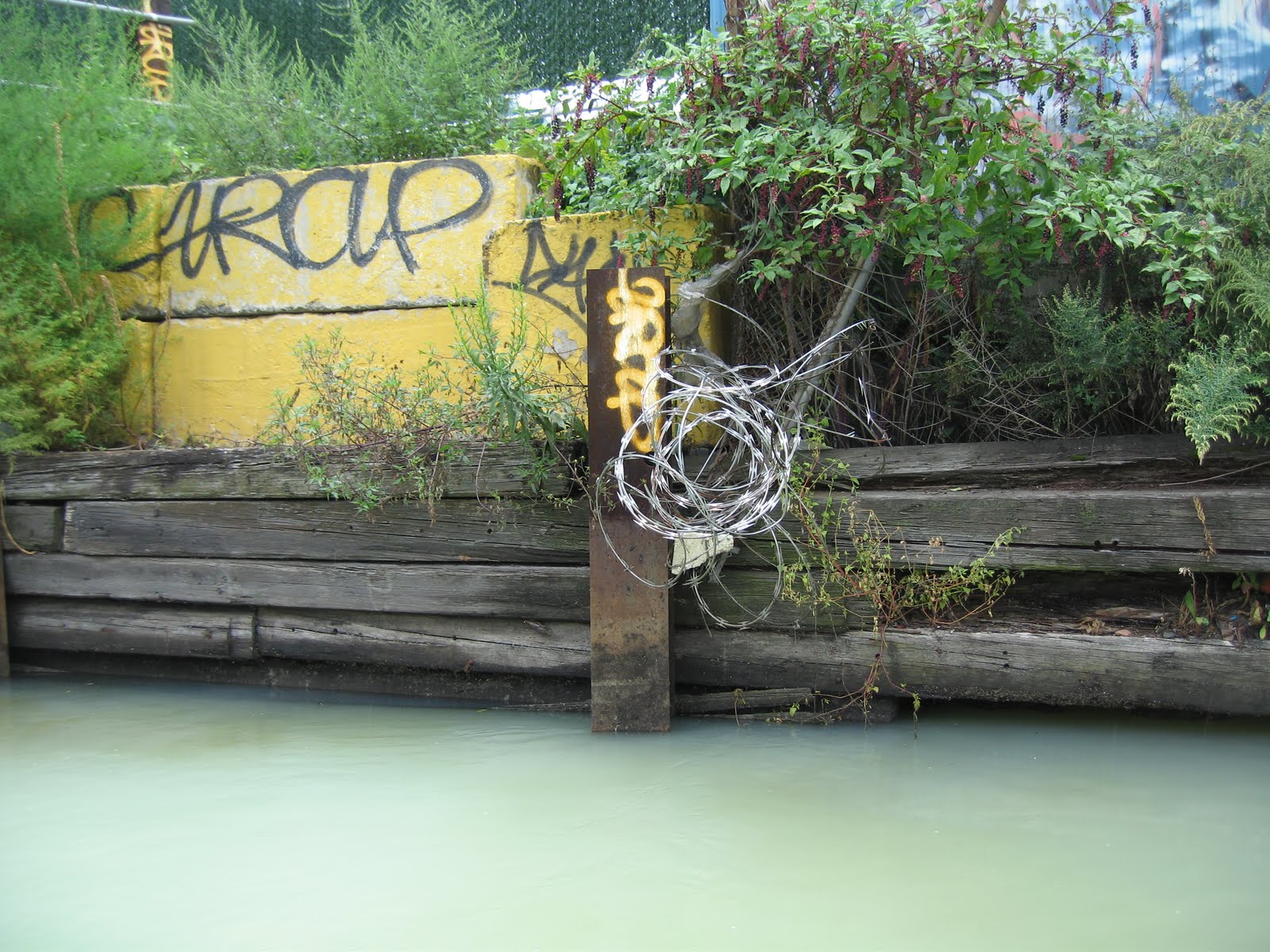
The water in the inner reaches of urban waterways like Newtown Creek and Gowanus Canal is polluted beyond comprehension. Yes, the white stuff in the foreground is water. These “out of sight – out of mind” waterways are like giant, 500 foot diameter pipes discharging a toxic mix of petroleum products, heavy metals, chemical compounds and sewage pathogens into the waters of NY Harbor and the Hudson. We have much work ahead to clean these cesspools up.

Learn more about the oil spill under Greenpoint, Brooklyn that's leaching into Newtown Creek.


Monday, August 17, 2009

Coal Tar in Gowanus Canal and Poughkeepsie


Coal Tar was a by-product of a process which extracted gas from coal. The gas was used for heating, cooking and lighting until the 1960’s. Today there are hundreds of polluted sites in NYS, including many in the Hudson Valley, where the Manufactured Gas Plants (MGP) once operated. On the Gowanus Canal in Brooklyn we routinely see coat tar bubbling to the surface from contaminated bottom sediments. But it’s not just a NYC problem. The second photo shows coal tar in the reflection of the new Railway Bridge Park at Poughkeepsie. This one is about 4000 feet from Poughkeepsie’s drinking water intake pipe. MGP sites are slowly being targeted for remediation by NYS DEC - which is a good thing.

Monday, August 10, 2009

Successful Enforcement on Newtown Creek


We observed glass and mixed paper and plastic labeling falling off a deck barge at Sims Municipal Recycling facility on Newtown Creek. We contacted Sims management and within ONE DAY had a response from the facility manager and his staff. They immediately shifted to deep hopper barges. Great response – problem solved. We wish all polluters behaved this way.


Wednesday, September 17, 2008

Testing Water Quality at Kingston


Collecting a sample directly from the outfall of the Kingston sewage treatment plant,
which discharges into Rondout Creek in downtown Kingston.


Rondout Creek is heavily used by fishermen, recreational boaters, kayakers and swimmers. We sample at three locations during every patrol. Some days the cleanest water we find is at the sewage treatment plant discharge. That means that raw untreated sewage is entering the creek at other locations. The local health department does not test in Rondout Creek and posts no warnings for the public. Meanwhile, the DEC renews permits to the City of Kingston for raw sewage overflows and Kingston plans to build a few thousand new housing units that will tap into the existing sewage treatment system.

Thursday, April 17, 2008

Observations: Kingston to Castleton

Rondout Creek patrol early morning. Looking east at the CSX RR bridge. I don't go under the bridge when there is a train crossing. Chicken.

A flexible hose, like fire hose, has been led down the south bank of Catskill Creek from the area of the swimming pool at Forlini's Resort. We saw this hose coiled at the top of the slope several years ago. I investigated and found that the resort had closed. Now the hose has been deployed, presumably to pump out the pool.

At this time it may just be water which accumulated over the winter but it indicates that the resort may be reopening and we will have to warn them about discharging chlorinated water pool later in the season.

The smaller black suction pipe visible near the fire hose is probably used to suck up creek water for use at the resort. Catskill Creek is a spawning ground and home for a number of fish species.

Between Catskill Creek and The Rip Van Winkle Bridge on the west bank and straight across from Olana. Visitors to Olana get this view looking west. Another case of "Too bad sucker, I've got my beautiful view and to hell with yours". Good thing Frederic Church isn't round. He might go postal.

A very well established camp on Primming Hook on east bank north of Hudson. All the building materials were brought in by boat. This is prime habitat. To the north is a Scenic Hudson marsh. To the south is Open Space Institute land at Hudson. To the east is the Amtrak rail line. Clearing the camps (this is one of two) and adding this parcel to the surrounding preserved area would be great.


Eroded bank at Castleton Boat Club. In the past the club used waste cement test cylinders, spent machinery and extra building materials as fill and we warned them about the illegality of doing so again.

Erosion over the winter has exposed tires buried sometime in the past as fill. Very tidy stacking. How many tires are buried at the site? How much and what other kinds of waste material were buried?

An active Bald Eagle nest with kayakers below. Moments after I took this photo the eagle swooped down and attacked one of the kayakers. (Just kidding!)

Monday, April 07, 2008

Marjam Construction on Newtown Creek

Basil pointing at a new discharge pipe from a cement supplier just south of the Kosciusko Bridge on the Brooklyn side of the creek.


Marjam Construction is throwing waste material out the far end of the storage containers across the property line and into the creek. We enforced against Marjam several years ago for a similar violation. We saw this current dumping start in December 2007.

Sunday, December 09, 2007

Dredge spoil dump on Houghtaling Island

Dredge process water is being discharged from the spoil dump on Houghtaling Island into Schodack Creek. Permit?

We were unable to get the "Fletcher" north past Saugerties in early December because of ice.

Trailered the skiff to Stuyvesant to investigate an active ACE dredge spoil dump on Houghtaling Island.

Thursday, May 17, 2007

Checking the water quality in Newtown Creek


We did sampling in the East River with Lamont-Doherty's Greg O'Mullen and his crew, as part of our water quality pilot program. We also patrolled with City Limits Reporter and a PBS film crew.


Discovered a new oil absorb that Exxon installed at Meeker Avenue. This is at the eastern end of the original plume which is migrating. We suspect that the plume has found a new route into the creek.


At the east branch of Newtown Creek we found a discharge from a cement plant. We have had a successful prosecution of another cement plant on the Creek. This is a second plant we’re investigating. We’ve commented on this discharge and it ended. It has since started up again.


Sunday, May 06, 2007

Taking Attorneys and Press out on Newtown Creek

Out on Newtown Creek with an editorial crew from New York Magazine.


Church property on Harlem River.

Newtown Creek with Attorneys from Girardi and Keese and a film crew. This legal team successfully prosecuted the famous Erin Brockovich case and now they’re going after EXXON on behalf of local home and business owners in Greenpoint Brooklyn.

Wednesday, April 18, 2007

Gowanus Canal Water Quality - Yuck!

Photos by John Lipscomb
Sample from the bottom of the Gowanus Canal


4/18/07: At the Gowanus Canal we sampled with Lamont-Doherty's Greg O'Mullan, as part of our water quality pilot program.

Friday, March 30, 2007

Harbor School students on patrol


On 3-27 and 3-29-07 we patrolled Newtown Creek with students from the Harbor School. Sabrina Wells from Riverkeeper described the environmental problems facing Newtown Creek and Riverkeeper's case against EXXON MOBIL. The Harbor School is a high school in Brooklyn which integrates it's curriculum into the study of maritime culture history and the environment of New York City and its surrounding waters.

It was great for us to get to speak with local students about THEIR waters.


3-29-07 on the Harlem River on the Bronx side near Highbridge there is a church owned property where all kinds of trash and waste are being dumped into the River.


Riverkeeper has been gently asking for a cleanup for a year now. I'd like to end the gentle part now. This is not only the most blatant dumping on the Harlem River but it's also a terrible embarassment - every tourist from every corner of the world who rides the Circle Line around Manhattan gets to see the low regard some of us have for our water.

What astounds me is that none of the NYPD boats, DEC or DEP and NY Parks boats which often pass by seem to have ever reported this site. They all have the mandate AND the authority to order a cleanup.

Thursday, March 29, 2007

A small victory on Newtown Creek

Photos by John Lipscomb

On 3/27/07 we returned to Newtown Creek and found a recycling barge losing some plastic material through a tear in its protective netting. We called Basil Seggos at Riverkeeper who put us in contact with an executive with the company.

Within 15 minutes of contacting the executive we saw a crew board the barge to clean up the material and repair the netting.

What a great response! It's not often that industry responds so eagerly.